Hope in the City: Come for the Stunning Aesthetic, Stay for the Gripping Family Mystery
Hope in the City Review: This Artsy Sketchbook Mystery Is 2026’s Most Unique Detective Game
Looking for a groundbreaking new detective game on Steam? Read our comprehensive 1,500-word Hope in the City review! Discover Lofty Sky Entertainment's 2026 artsy mystery, the innovative sketchbook logic system, and Chinese cultural lore.
The year 2026 has officially shaped up to be a historic, highly competitive era of artistic innovation for the global independent video game industry. With digital distribution platforms hosting literally millions of active titles for PC, independent creators face an immense, near-impossible structural challenge when attempting to capture consumer attention. Simply delivering polished graphics, smooth movement tracking, or traditional linear puzzle mechanics is no longer enough to command authority or secure an organic foothold within high-volume search indices. To truly break through the noise, a studio must engineer a defining, completely transformative mechanical hook that treats the medium of interactive entertainment as a genuine work of art.
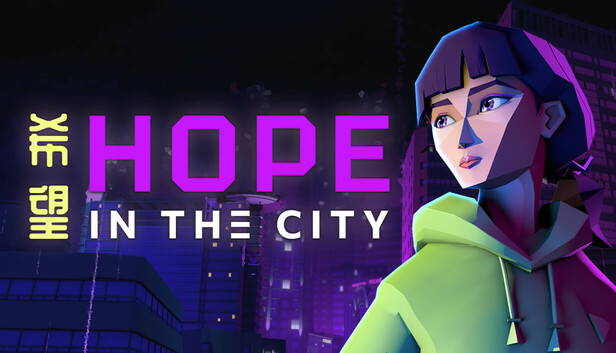
Stepping forward to claim this creative throne on May 28, 2026, the acclaimed storytellers at Lofty Sky Entertainment officially dropped their latest flagship project into the PC ecosystem: Hope in the City. Arriving on Steam with an exceptional pedigree—developed by the exact same visionaries behind *Sky of Tides*, which proudly captured the prestigious "Best in Play" Award at GDC 2026, and the historic animated feature *Eternal Spring*—this artsy detective mystery shifts the paradigm of interactive investigation. By completely replacing traditional, clinical UI menus with an organic, deeply expressive sketchbook logic engine, the game turns the simple act of clue coordination into a beautiful exploration of the human mind. In this comprehensive 1,500-word review feature, we deconstruct its unique visual identity, evaluate its non-linear logic systems, map out its atmospheric Northeast China setting, and explore why this release stands as the definitive indie mystery masterwork of 2026.
The Creative Pedigree: The Narrative Masters at Lofty Sky
To fully comprehend the deep emotional resonance and cinematic maturity anchoring *Hope in the City*, one must look at the stellar artistic lineage of its development and publishing house, Lofty Sky Entertainment. The studio has spent years establishing a bulletproof reputation for crafting high-concept, socially conscious fiction that seamlessly bridges the worlds of traditional filmmaking, independent animation, and game design.
The studio's cultural footprint is remarkably distinguished. They previously engineered *Eternal Spring*, a groundbreaking, universally celebrated production that marked a historic milestone as Canada’s very first fully animated movie selected as the country’s official Best International Feature Film entry at the Academy Awards. Following that cinematic triumph, the team pivoted their technical toolkits back toward the gaming sphere, unleashing *Sky of Tides*, which completely dominated developer tracking logs to win "Best in Play" at the Game Developers Conference (GDC 2026). By funneling this exact same level of award-winning animation expertise, uncompromised writing talent, and deep respect for cultural authenticity into *Hope in the City*, Lofty Sky has isolated a remarkably fresh narrative rhythm that feels beautifully cinematic, emotionally raw, and structurally ironclad.
The Narrative Crucible: Disappearance in Northeast China
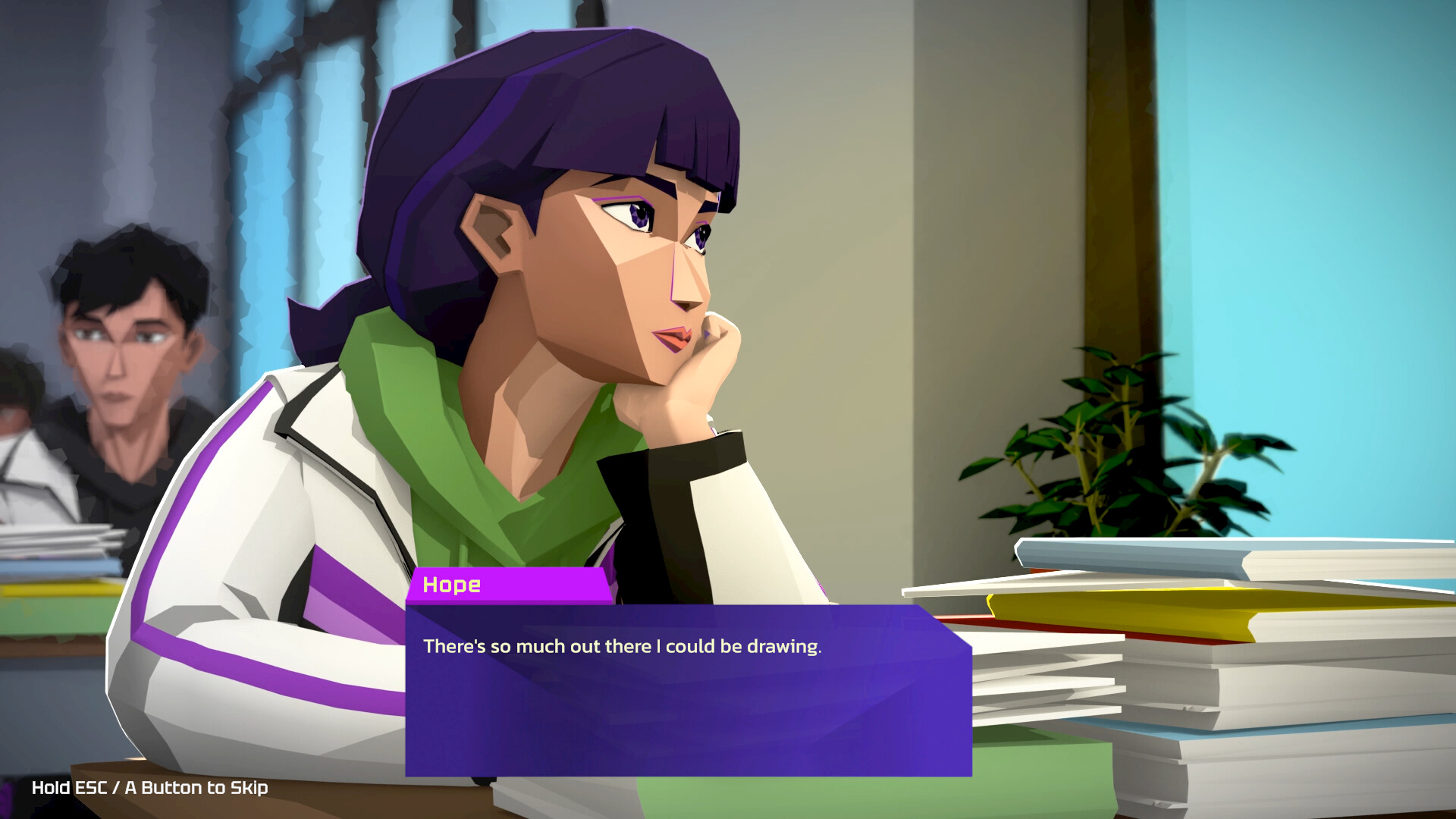
The story of *Hope in the City* avoids generic Hollywood detective tropes, choosing instead to anchor its high-stakes tension inside an intimate, localized family drama. The campaign drops players into the worn school uniform of Hope Song, an artistic seventeen-year-old high school student residing in a rapidly modernizing urban center across **Northeast China**.
The psychological hook of the script ignites instantly. Hope returns home from a routine day at school only to step into an empty house, discovering that both of her parents have suddenly and mysteriously vanished without a single trace or warning letter. Recognizing that the local authorities are handling the situation with slow bureaucratic indifference, Hope throws caution to the wind, initiating a self-directed, high-risk investigation into the disappearance herself. As she digs into hidden household files, explores quiet city corners, and interviews local residents, she begins to peel back the polished layers of her community, uncovering a series of ugly family secrets, historical corporate cover-ups, and hidden generational traumas beneath their normal, seemingly peaceful city life. The writing approaches these mature themes with exceptional grace, allowing the central mystery to function as a moving coming-of-age odyssey.
The Central Mechanic: Inside Hope’s Mind via the Sketchbook Interface
Mechanically, *Hope in the City* completely distances itself from traditional point-and-click detective games. In a standard mystery title, tracking clues involves opening a sterile, black-and-white inventory spreadsheet where items are listed as simple text files. In this game, your primary tool, navigation hub, and investigative sanctuary is Hope's personal, physical artist sketchbook.
Because Hope experiences the world entirely through the lens of a visual artist, the sketchbook functions as a gorgeous, interactive mirror of her inner mind. It is a space where fleeting memories, immediate visual observations, handwritten notes, and conceptual connections continuously overlap, collide, and interact with each other in real time. The developer team has deliberately designed these journal modules to look delightfully messy, tactile, and expressive. The interface utilizes multi-layered paper textures, imperfect graphite lines, spilled watercolor washes, and charcoal sketches that animate softly as you interact with them. When Hope observes an anomaly in the real world—such as a misplaced photo frame or a hidden wall engraving—she does not simply add a data log; she manually draws a highly personal sketch of the item, adding her own emotional commentary, artistic interpretations, and subconscious annotations along the borders of the page.
The Logic Engine: Non-Linear Deductions and Intuition Matrices
To progress through the multi-layered investigation, players must actively dive into the sketchbook interface to engage the game's proprietary Intuition Deduction Engine. The gameplay layout completely shuns rigid, hand-holding navigation markers or singular linear progression tracks, inviting users to build their own interpretive pathways through the evidence.
The system operates on an open-ended, non-linear grid architecture. Within your sketchbook canvas, you can manually select separate sketches, handwritten text blocks, and physical clues, drawing physical lines with your pencil tool to connect disparate thoughts and ideas together. Solving an objective demands a delicate balance of strict rational logic and soft artistic intuition. For instance, connecting a sketch of a rusted industrial key found in her father's study with a messy watercolor observation of an abandoned warehouse on the city edge might flash a prompt, opening up an entirely new narrative branch, unlocking fresh dialogue choices with city outcasts, or exposing hidden geographic pathways across the map. This framework transforms the act of deduction into a deeply rewarding creative sandbox, making you feel like a genuine detective parsing the complex mechanics of human memory.
| Investigative City Sector | The Artistic Interface Vector | Primary Deduction Challenge | Target Clue Discovery Asset |
|---|---|---|---|
| The Family Apartment | Layered charcoal sketches of abandoned personal spaces. | Sifting through hidden desk slots and matching faded wall discoloration patterns. | An old photograph exposing long-hidden roots in Northeast China. |
| The Municipal Art Plaza | Vibrant, messy watercolor notes of urban architecture. | Interfacing with suspicious local street artists and tracking movement schedules. | A rare, customized sketch motif that duplicates her father's historical style. |
| The Abandoned Foundry | Industrial line art notes on rusted machinery components. | Connecting ancient logistics sheets with modern corporate transit coordinates. | A locked high-containment vault housing her parents' private journals. |
The Aesthetic Contrast: Hand-Drawn Expression Meets Cinematic Realism
From a purely presentation standpoint, *Hope in the City* delivers a spectacular, highly confident visual juxtaposition that stands out as one of the greatest artistic triumphs of 2026. The software splits its rendering pipeline cleanly across two distinct world styles.
When you are actively navigating the streets of Northeast China, the engine showcases a highly polished, moody cinematic realism. The city spaces look heavy, real, and beautifully grounded, capturing the authentic textures of weathering concrete walls, shifting neon storefront lights, and misty morning rain showers that bounce realistically off the asphalt blocks. However, the exact moment you press the hotkey to open your journal, the screen seamlessly transitions into the warm, textured, and entirely hand-drawn realm of Hope's sketchbook. This stark contrast perfectly mirrors the psychological theme of the game: navigating an unfeeling, cold outer world while preserving a hyper-vibrant, deeply sensitive inner sanctuary of creativity. This spectacular duality is completed by an immaculate acoustic package, wrapping the player in a beautiful blend of traditional Chinese instrumentation, modern ambient low-fi chords, and soft field recordings that cultivate an uncompromised zen focus.
"Hope in the City elevates the detective genre from a boring exercise in data gathering to a profound, deeply moving exploration of how art and intuition can unlock the hidden truths of the human heart."
Conclusion: The Defiant Masterwork of the 2026 Release Calendar
Ultimately, the comprehensive launch showcases and feature overhauls for Hope in the City establish this indie adventure as an absolute mandatory download for your digital libraries and wishlists ahead of the summer season. Lofty Sky Entertainment has successfully pull off an extraordinary creative milestone, proving that a serious, emotionally complex family drama can be masterfully paired with highly innovative, artsy game mechanics when guided by true creative sincerity.
While the non-linear, slow-paced deductive structures and deep reliance on player intuition will undoubtedly test the patience of casual action fans who demand constant adrenaline tracking loops, its exceptional visual design, brilliant sketchbook interface, and profound narrative depth guarantee it will secure a passionate, hyper-loyal following across the globe in 2026. Clear out your evening schedules, sharpen your colored pencils, and head over to Steam to check out the full build today—the city is quiet, the sketchbook pages are blank, and Hope is officially ready to find the truth.
Hope in the City Production Specifications:
- Developer / Publisher: Lofty Sky Entertainment (Toronto / International).
- Official Global Release Status: Out Now on PC via Steam (Product Modules Active).
- Primary Narrative Setting: A modern urban center in Northeast China.
- Core Gameplay Mechanics: Non-Linear Detective Infiltration, Sketchbook Clue Alignment, Intuition Logic.
- Historical Studio Milestones: GDC 2026 "Best in Play" Winner (*Sky of Tides*) / Academy Award Entry (*Eternal Spring*).
- Art Direction Style: Cinematic Realism Environments integrated with 2D Multi-layered Hand-Drawn Notebook Textures.