The Price of Admission: Why You Shouldn’t Wait for a Bargain to Buy Discounty
Discounty Review: Is This Cozy Pixel-Art Supermarket Management Simulator Worth Full Price on Nintendo Switch?
Looking for the ultimate cozy store simulator? Read our definitive 1,500-word Discounty review! Discover Nintendo Switch control fixes, local trade optimization guides, and hidden town secrets.
The year 2026 has officially established itself as a golden era of creative validation and structural expansion for the global independent game development community, particularly within the highly popular "cozy gaming" market sector. For several consecutive seasonal blocks, mainstream digital storefronts have been systematically flooded with stressful, resource-heavy live-service shooters and gritty survival grinds that demand endless hours of intense concentration. However, the modern gaming audience has developed a deep sense of consumer burnout. Today's players are actively turning their attention toward alternative interactive experiences—demanding lighthearted sandbox simulations that trade life-or-death combat stakes for emotional comfort, gentle slice-of-life mechanics, and a profound sense of neighborhood community building.
Answering this massive cultural craving, independent developers officially rolled out their flagship grocery retail manager, Discounty. First brought to critical light through early-access review cycles on October 6, 2025, and consistently polished with systemic software updates moving into mid-2026, this striking pixel-art simulator is fully active across PC via Steam and the Nintendo Switch eShop. Blending the comforting, top-down character interactions of titles like Stardew Valley with the hyper-addictive, meticulous logistics of an industrial store manager, *Discounty* invites players to step behind the counter of their very own grassroots supermarket. In this comprehensive, long-form 1,500-word critical analysis and Switch performance review, we deconstruct its extensive store customization mechanics, evaluate its fast-paced retail gameplay loops, inspect its localized economy structures, provide practical console control optimization strategies, and explore whether this cozy release justifies an immediate full-price purchase in 2026.
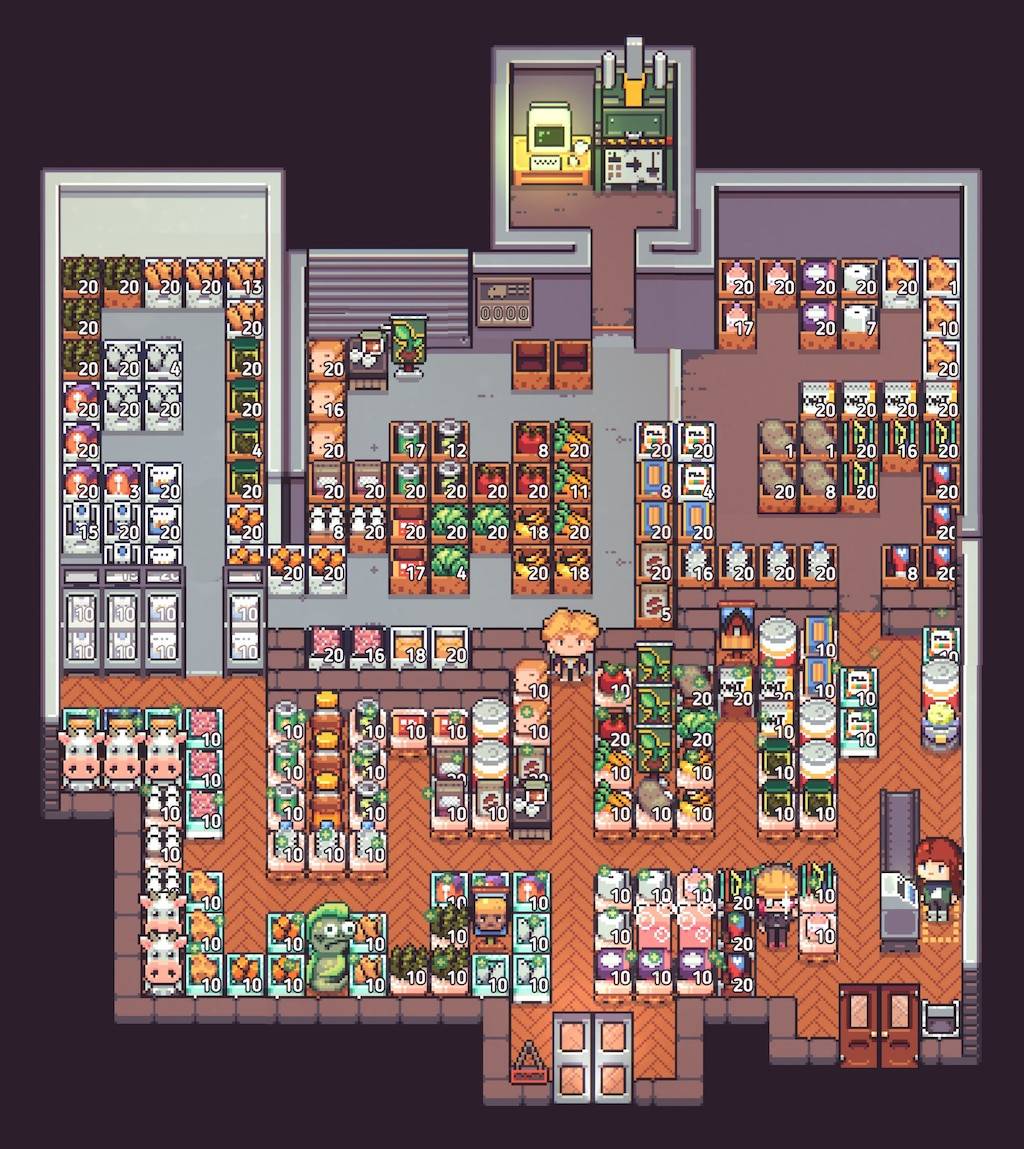
The Structural Premise: From a Trailer Home to Retail Royalty
Let's face the facts honestly: the vast majority of modern management simulators treat the service industry with a cold, numbers-heavy clinical distance. Mainstream titles frequently focus on sterile spreadsheet interfaces and completely automated inventory chains that sacrifice personal charm for macro-level optimization. *Discounty* aggressively pivots away from this robotic paradigm, wrapping its core capitalistic loops inside a deeply endearing, small-town narrative that celebrates the simple beauty of everyday community service.
The campaign drops your customizable pixel avatar right into a modest trailer home located on the outskirts of a quirky, close-knit rural town. Your grand, non-negotiable directive? Take full ownership of a vacant, empty commercial property and build a thriving, hyper-prosperous neighborhood supermarket entirely from scratch. You aren't merely a passive corporate executive checking off boxes from a remote boardroom; you are the sole, front-line operator managing the daily hustle of a local grocery store by yourself. The game captures this retail routine with immense artistic respect, forcing you to balance the physical demands of customer service against back-end inventory procurement and spatial organization, transforming standard workplace management into an incredibly rewarding puzzle of community growth.
Layers of Customization: Designing the Ultimate Neighborhood Store
The absolute centerpiece driving the long-term replayability and creative satisfaction of *Discounty* is its hyper-integrated Supermarket Customization Engine. The development team has made sure that your little supermarket is truly all yours, granting players complete creative autonomy over the aesthetic and structural layout of their commercial property.
Upon naming your shop—a high-stakes creative milestone that beautifully mirrors the intense mental turmoil players routinely confront when naming an island in Animal Crossing: New Horizons—the physical layout grid becomes your blank canvas. Players can collect, unlock, and equip an expansive library of distinct wallpaper patterns, stylized flooring tiles, and theme-oriented aesthetic assets to tailor the environment to their exact style. You possess absolute authority over where to position multi-tier display shelves, large industrial freezers, and cash registers to optimize customer foot traffic paths. To expand your creative reach even further, the economy allows you to purchase a wide variety of secondary furniture pieces and decorative clutter items to completely customize the interior of your private trailer home, grounding your character's domestic life perfectly alongside their blooming business empire.
The Commercial Power of Local Merchants
What makes the customization loop remarkably brilliant is that interior decoration is directly linked to your store's underlying economic performance. Upgrading your visual appeal is not merely a superficial cosmetic exercise; it acts as a primary multiplier for your daily profit margins. To secure high-tier decor assets, players must actively visit specialized, wandering merchant stalls operating within the local village square:
- Isenkram’s Hardware: Run by the eccentric Ted Isenkram, this hardware hub stocks a robust assortment of industrial shelves, premium paint tones, and specialized thematic decorations. Placing these items in close proximity to your sales floors actively boosts the conversion rates and buying probability values of specific product categories, helping you earn more cash per transaction.
- Antics Antiques: Governed by the charming Solruna, this antique boutique features a highly volatile, randomized inventory of vintage furniture, rare wallpapers, and premium flooring sets. Solruna’s stock changes completely every single morning cycle, introducing a fantastic layer of daily discovery that forces you to check her shelves regularly to catch rare, limited-edition interior assets.
The Core Gameplay Loop: Mops, Boxes, and Manual Till Mechanics
Once your storefront doors are officially thrown open to the public, *Discounty* shifts gears to unleash a fast-paced, hyper-engaging Time-Management Service Loop. The game engine simulates an active, realistic working day where players must balance physical store logistics, checkout queues, and interior sanitation parameters simultaneously in real time.
As the town residents stream into your aisles to harvest goods, you must rush around the floor maps like a whirlwind—hauling fresh grocery boxes out of the storage room to continuously restock empty shelves and freezers before customer satisfaction ratings begin to plummet. All the while, you must monitor the floor tiles to mop up little muddy messes and spills that accumulate over the course of the workday. The absolute highlight of this management loop is the manual operation of the primary checkout register. Shifting completely away from the boring, automated point-and-click scanners standard in low-effort mobile games, processing a transaction in *Discounty* requires true, un-handheld precision. You must open a handwritten notebook containing the individual costs of every single item, manually calculate the sum on a physical numeric keypad, and enter the correct charge. When a massive queue forms at closing time and clients start buying multiple identical units, this mechanic turns into a high-octane brainteaser that keeps your nerves delightfully on edge.
| Grocery Product Acquisition Route | Primary Supply Chain Method | Exclusive Strategy / Mechanic Advantage | Macro Store Progression Yield |
|---|---|---|---|
| Wholesale Computer Orders | Digital terminal desk, instant automated shipping. | Gus the Delivery Guy drops boxed inventory right to your back door. | Provides steady, reliable baseline access to generic commercial foods. |
| Localized Town Trade Deals | Direct interpersonal barter with individual NPCs. | Unlocks exclusive organic crops, artisan crafts, and specialty dairy items. | Unlocks powerful account buffs and multipliers as deal tiers level up. |
| Advanced System Expansion | XP milestone leveling via the central network. | Permanently introduces premium high-tier frozen items and exotic goods. | Attracts wealthier customer demographics to maximize daily profits. |
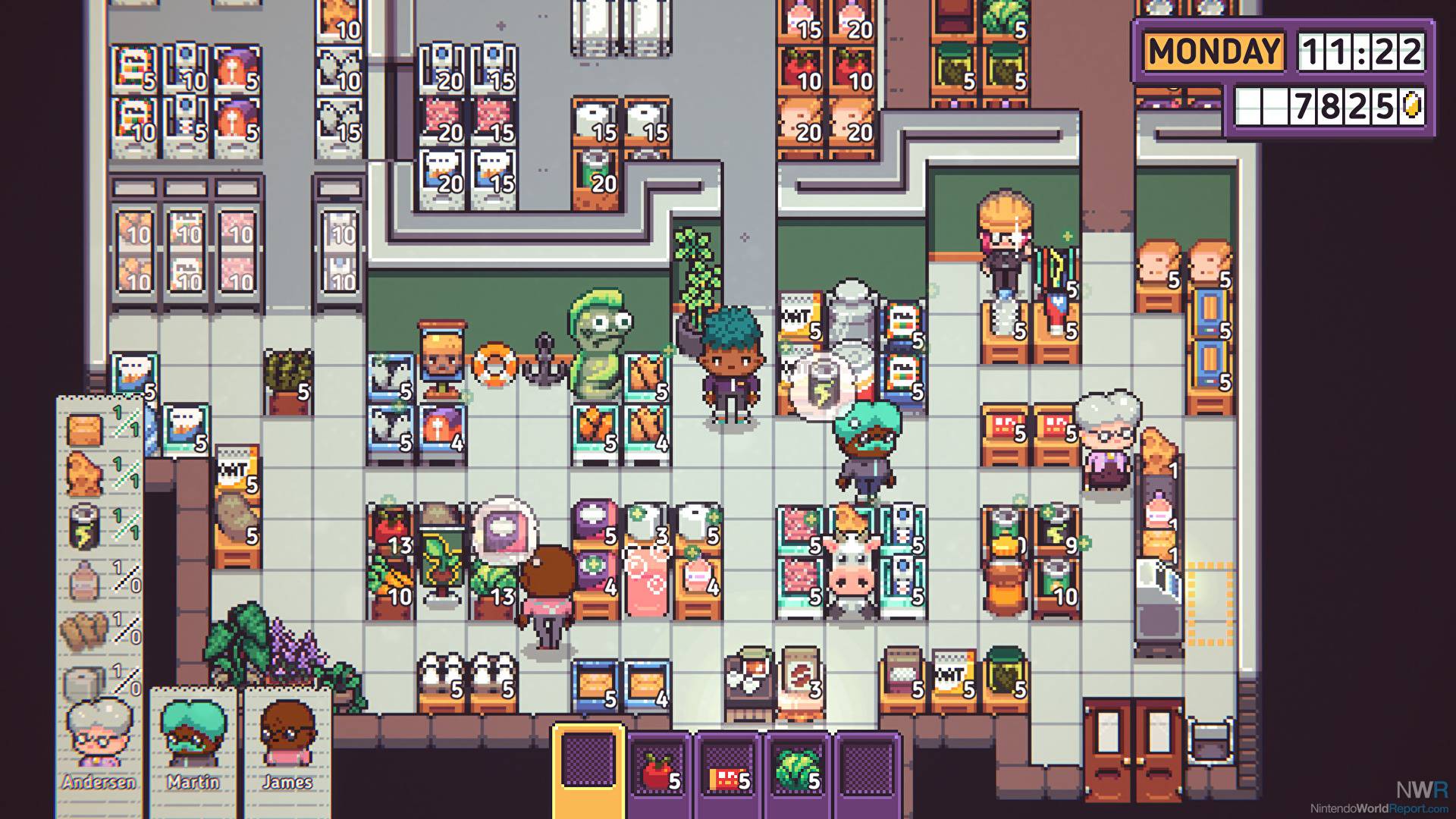
The Supply Chain: Recycling Logistics and Localized Trade Tariffs
To support your front-end sales, *Discounty* introduces a surprisingly deep, highly rewarding Storage Room and Logistics Matrix. When your central back-room reserves run thin, players must interface with an in-store desktop computer to place bulk wholesale orders. Within a few seconds, Gus the Delivery Guy arrives in his transport truck to drop off your product orders securely packed inside cardboard boxes and insulated freezer containers, forcing you to rapidly haul and unpack the stock before the products spoil.
The attention to detail engineered by the development studio shines beautifully within the game's integrated Recycling Economy. Once you have successfully emptied your delivery boxes, you are left with piles of raw packaging waste clogging your narrow back-room paths. Rather than letting this trash simply vanish into a generic deletion menu, the mechanics require you to physically carry the empty boxes out to a dedicated public recycling zone. Players must sort the waste into the correct paper, plastic, and metal bins—rewarding accurate sorting with immediate bonus cash payments, which teaches real-world environmental responsibility within a highly satisfying gameplay loop. To further diversify your stock, players can ignore the computer terminal to negotiate custom, independent Trade Deals with eccentric local residents. Selling these exclusive, hand-crafted local goods increases your standing with the corresponding merchant, unlocking powerful permanent passive buffs that supercharge your store's performance metrics over time.
Room for Improvement: Empty Dialogue and the Cursed But Curious Enigma
Approaching this review with absolute analytical candor requires shifting our viewport away from the pristine mechanics to evaluate a few notable narrative and structural design choices that could benefit from subsequent software optimization patches. While the core store simulation loop is immaculate, the wider world occasionally exhibits minor areas of friction.
First and foremost, the game world houses a fascinating, deeply atmospheric, yet completely non-functional landmark: a heavily weathered, dilapidated storefront known across the town lore as Cursed But Curious. When parsing the town grid during your introductory weeks, any veteran strategy fan would naturally assume this mysterious building represents a massive, unlockable endgame shop or a supernatural quest hub waiting to be reactivated through progression milestones. Tragically, throughout the entire campaign loop, nothing ever happens with the building; it remains a static, locked piece of background environmental dressing. While this choice does not disrupt your baseline gameplay, it stands out as a major missed opportunity for a unique late-game progression target. Furthermore, while the character interactions capture a lovely aesthetic charm, the actual written dialogue pools for the townsfolk can occasionally feel slightly repetitive and empty over prolonged seasons, leaving you wishing you could forge deeper relationships with your frequent buyers.
"Discounty masterfully pairs the nostalgic visual warmth of a classic pixel-art adventure with a fiercely engaging, delightfully tactile supermarket management engine that makes every transaction a triumph."
Console Calibration: Conquering the Nintendo Switch Till Controls
Our comprehensive performance stress-testing of the **Nintendo Switch client build** confirms that *Discounty* runs with exceptional structural stability on console hardware. The vibrant, hand-drawn pixel assets display immaculate clarity on both portable and docked screens, maintaining a locked, highly responsive frame rate with zero screen-tearing lines or performance stutters—a critical requirement when navigating packed grocery aisles during peak business hours.
However, players migrating to the console version must prepare for a distinct learning curve regarding the Register Pointer Physics. On the PC edition, typing out calculations is a breeze, allowing users to leverage physical keyboard buttons or rapid mouse clicks to input customer costs instantly. On the Nintendo Switch button layout, the developer has mapped the register pointer directly to the analog thumbstick. To enter a number, you must physically hold the stick to slide a virtual pointer over the desired digital key on the screen. Because the thumbstick features a rapid auto-centering spring mechanic—instantly snapping the cursor back to the exact middle of the grid the second you release tension—it can feel clunky and uncomfortable during hectic rushes, occasionally causing you to hit an incorrect number and reset the entire calculation. While it certainly does not ruin the game, it requires a steady thumb and a bit of deliberate muscle memory to master during high-volume checkout queues.
Conclusion: The Ultimate Retail Sanctuary of the Season
Ultimately, our comprehensive critical breakdown confirms that Discounty stands out as an exceptionally polished, beautifully designed, and dangerously addictive milestone for the lifestyle simulation genre. By masterfully proving that a workplace management simulator can comfortably carry a deep customization engine, a rewarding recycling loop, and an incredibly satisfying manual checkout mechanic without ever losing its cozy, zen-like soul, the developers have delivered an absolute triumph.
While the clunky analog register pointer on the Nintendo Switch and the un-interactive nature of the Cursed But Curious storefront will naturally test the patience of tech purists, the sheer atmospheric polish, heartwarming visual presentation, and pure fun of building an independent retail empire easily eclipse these minor design choices. There is absolutely no reason to sit on the fence or wait for a deep retail sale across digital storefronts; this title is worth every single penny of its full-price valuation right now. Clean out your device memory slots, brainstorm your ultimate supermarket name, and purchase your copy today—the delivery trucks are fully loaded, the shelves are waiting to be stocked, and your journey to becoming the ultimate neighborhood retail king has officially commenced!
Discounty Global Enterprise Production Blueprint:
- Core Release Distribution Gateways: Nintendo Switch eShop / PC via Steam Storefront Hub.
- Primary Gameplay Genre Framework: Top-Down Isometric Supermarket Simulator / Cozy Lifestyle Sandbox.
- Key Economic Mechanics: Manual Keypad Register Balancing, Sorting Recycling Bins, Localized Trade Barters.
- Star Commercial Partners: Isenkram’s Hardware (Ted Isenkram) and Antics Antiques (Solruna).
- Technical Performance Metrics: Full 1080p Docked / 720p Handheld Scaling, Locked Console Frame Rates.
- Baseline System Comfort Features: Complete Avatar Customization, House Modification, Infinite Item Logs.