A Spark in the Dark: Inside the Ambitious but Frustrating Mechanics of Code Violet
Code Violet Review: Why TeamKill Media’s Ambitious 2026 Sci-Fi Dino-Horror Shooter Fails to Live Up to Its Resident Evil Potential
Stuck on the brutal locker code puzzles or struggling with clumsy over-the-shoulder aiming? Read our definitive 1,500-word Code Violet review! Discover TeamKill Media's 2026 campaign, Violet Sinclair's stat-boosting outfits, and dino combat strategies.
The year 2026 has officially shaped up to be a historic, exceptionally competitive era of absolute structural experimentation and intense artistic scrutiny within the global first-person and third-person action-adventure survival horror marketplaces. For several consecutive seasonal blocks, mainstream consumers and survival horror purists across the United States have been aggressively hunting for fresh interactive experiences capable of replicating the glorious, golden-era mechanics of iconic foundational masterpieces. Gamers are actively seeking out titles that merge claustrophobic inventory management with cerebral environmental puzzles, terrifying monster behavior, and deep narrative-driven campaigns that treat world-building as an absolute fine art. In this demanding landscape, excellent marketing has become the definitive backbone of the industry; publishers routinely structure their games to throw everything they possess at the user during the opening hour, attempting to hook player interest through immediate graphic fidelity and fluid combat design.
However, when independent developer and publisher TeamKill Media officially unleashed their highly ambitious sci-fi horror shooter, Code Violet, onto global networks on January 10, 2026, they completely threw out the traditional marketing playbook. Deployed exclusively as a premium next-generation console title for a baseline retail valuation of $49.99 USD / £39.99 GBP on the PlayStation 5, this striking release pulls off an incredibly baffling psychological stunt. Rather than hiding its flaws behind a polished early segment, the initial hour of the game aggressively flings every piece of unpolished developmental garbage directly into the player's face—ranging from stiff character animations and hilarious motion capture sequences to clunky aiming controls. Yet, beneath this deeply polarizing, rough outer crust lies a remarkably strong, surprisingly above-average plot structure that works tirelessly to salvage the experience. In this comprehensive, long-form 1,500-word PlayStation 5 review feature, technical performance analysis, and puzzle optimization guide, we deconstruct its amnesiac space colony lore, evaluate its linear old-school layout parameters, inspect its stat-boosting outfit mechanics, analyze its technical rendering flaws, and deliver an honest verdict on whether this ambitious indie effort justifies your hard-earned gaming capital.
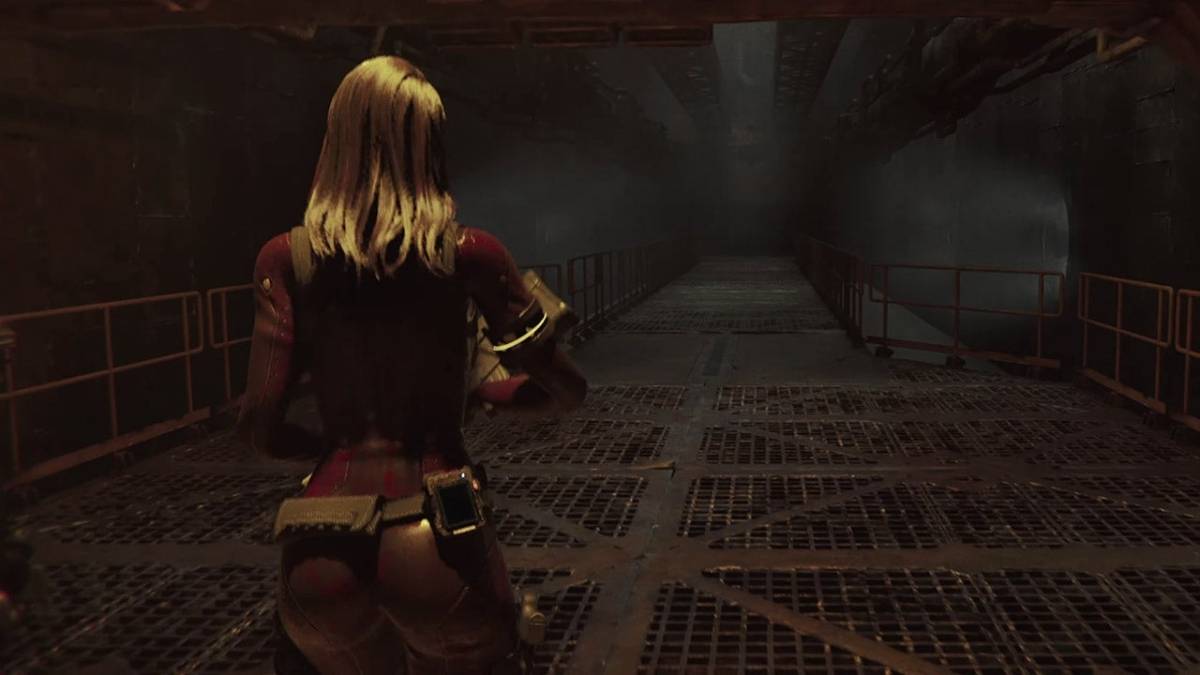
The Narrative Canvas: Violet Sinclair, Amnesia, and the Space Colony Extinction
To fully deconstruct the unique narrative weight and storytelling potential anchor-pointing *Code Violet*, one must first isolate the core plot ideas guiding the script. The game completely discards traditional zombie or mutant virus tropes to deliver a fascinating sci-fi premise that blends cosmic isolation with prehistoric biological terror.
The campaign drops players right into the heavy traveling boots of Violet Sinclair, a beautifully modeled, deeply mysterious young woman who suddenly awakens trapped inside the cold, industrial corridors of an abandoned, heavily ravaged research facility. Your initial survival instincts must fire instantly, as you rapidly discover that the facility is actively populated by ravenous, hyper-aggressive **dinosaurs**. As Violet scrambles to keep her head securely on her shoulders, she is contacted via radio by a distant friend and operational handler who helps guide her through the initial maze of blood-splattered hallways. By exploring the rooms and reviewing discarded corporate documents in a true *Resident Evil* fashion, a massive existential revelation rapidly surfaces: mother Earth is completely no more. Human civilization has fled into deep space to establish floating colony networks among the stars, and the flooded, dinosaur-infested facility Violet is currently navigating is actually a high-tech space colony drifting through a remote orbital coordinate.
This grand premise is layered beautifully alongside a classic, highly motivating journey of personal self-discovery. Violet has lost her memory entirely—remembering absolutely nothing regarding her personal history, her past career, or how she originally ended up inside the colony matrix. Her progression through the dark corridors turns into a constant battle with her inner emotions, as the script expertly doses answers to burning questions regarding her true purpose and why prehistoric entities are running loose across a futuristic space lab. The plot structure is exceptionally gripping, serving as the single strongest propelling force that will keep you engaged until the final credit crawl rolls across your screen.
The Tragedy of Execution: Hilarious Voice Acting and Porous Motion Capture
Approaching this review feature with absolute analytical candor requires shifting our viewport directly toward the secondary, highly disastrous segment of the narrative framework: the physical presentation and character interpretation. While the underlying story ideas are above average, TeamKill Media's execution of cinematic cutscenes stands out as an absolute disaster for a next-generation 2026 title.
Because *Code Violet* is explicitly labeled as a high-clearance psychological horror experience, the animations try incredibly hard to convince the player of the severe emotional stakes. Tragically, due to porous motion-capture implementation and stiff, wooden facial expressions, these high-drama scenes consistently collapse into hilarious, immersion-breaking moments. For instance, you will watch Violet stand completely calm during a major crisis, only to violently burst into tears a single frame later with zero fluid facial transition, leaving a massive "WTF" sign hanging above the player's head. The voice-acting deliveries are remarkably flat, blunted, and soulless across the board—rendering the secondary survivor characters completely forgettable. If a close ally gets brutally slaughtered by a pack of velociraptors in front of your character, you won't give a single damn, as the mechanical, un-emotional line deliveries strip all dramatic weight out of the tragedy, proving that good script concepts are never enough if the performance engine is fundamentally broken.
The Gameplay Grid: Linear Halls, Hardcore Puzzles, and Zero Hand-Holding
Once you step out of the unpolished cutscenes to take physical control of Violet, the actual gameplay loop shifts into an old-school, highly linear Survival Horror Infiltration Matrix. TeamKill Media has boldly rejected modern open-world checklist trends to construct a traditional corridor-crawling system that heavily honors the design parameters of the original *Dead Space* and classic *Silent Hill* titles.
You progress through the levels by navigating tight, claustrophobic hallways, reviewing your localized map layout to unlock progression paths, and tracking down specific keycard assets to breach secure door boundaries. The single most commendable aspect of the gameplay is its uncompromised commitment to Zero Hand-Holding. The software completely refuses to guide your steps, leaving you entirely to your own devices to solve a series of highly intricate, remarkably hardcore environmental puzzles. The logic puzzles are exceptionally well-designed—challenging your deduction skills to the point that veteran genre fans may find themselves completely stumped by advanced elements, such as discovering the elusive four-letter codes required to crack open hidden storage lockers. This absolute lack of hand-guided assistance creates a fantastic, rewarding sense of personal discovery, forcing you to pay close attention to environmental clues and background logs to earn your passage to the subsequent sectors.
| Space Colony Sector Registry | Primary Prehistoric Hazard | Required Inventory Weapon Asset | Strategic Optimization Advice / Tip |
|---|---|---|---|
| The Industrial Medical Labs | Fast-moving, agile raptor mobs attacking from ventilation shafts. | Baseline 9mm Handgun and tactical combat knife. | Conserve your ammo; execute quick running turns to avoid corner traps. |
| The Subterranean Hydroponics Bay | Spitting dinos that obscure your display screen view with toxic bile. | Pump-Action Shotgun and automatic rifle platforms. | Explore side closets early to unlock the shotgun before entering tight rooms. |
| The Overclocked Core Reactor | Hyper-vivid armored dinos displaying unpredictable sideways sliding physics. | Heavy assault weapons and localized prototypes. | Hardcore Check: Focus fire on joint weak-points to disrupt tracking AI. |
| The Sovereign Command Bridge | Cinematic, multi-stage elite boss entities executing screen-sweeps. | The Endgame Prototype Energy Lance. | Equip your best stat-boosting earrings to manage high weapon recoil. |

The Combat Fracture: Clumsy Aiming Controls and Glitchy Enemy AI
Tragically, the immense satisfaction derived from solving the game's hardcore puzzles is consistently undermined by a severely flawed, clumsiest-in-class Shooting and Combat Engine. While you have an impressive arsenal of seven distinct weapon classes at your disposal—stretching from basic handguns and automatic rifles to a high-potency prototype lance—the execution of firearm physics is a massive trial of patience.
The weapons themselves pack a highly satisfying auditory punch, but actually landing a shot on a target is an exhausting chore. The over-the-shoulder aiming camera is incredibly clumsy and loose, and while a dedicated *Auto-Aim Function* exists within the game options menu block, the code is completely broken at launch, rendering the toggle entirely non-functional. Compounding this aiming friction is an absurdly high weapon recoil value; even after spending your gathered cash resources to purchase stability upgrades at modification stations, your automatic rifle volleys will continue to shoot all over the place. Worse yet, the dinosaur AI behavior is completely unnatural; enemies routinely slide erratically across the floor grids, glide through Violet's character model when cornering her, and completely block your camera field of view, resulting in cheap deaths and immense player frustration. This imbalance extends directly to the game's difficulty presets, where the recommended Medium parameter feels brutally un-adjusted, forcing reviewers to drop down to Easy mode simply to preserve their sanity and follow the plot lines.
Customizing Violet: Tracking Stat-Boosting Outfits and Earrings
To help mitigate the punishing combat balancing, *Code Violet* introduces a deep, highly rewarding Character Customization and Inventory Suite that draws heavy creative inspiration from the hallowed *Resident Evil* franchise. Players must manage a highly restricted inventory inventory grid, combining raw herbs and chemical materials to craft vital medkits and ammunition packs on the fly.
The absolute standout feature that will undoubtedly become a fan-favorite element among the community is the extensive Outfit and Hairstyle Customization Dashboard. The character modelers have poured an immense amount of care and graphical detail into Violet’s personal wardrobe. Throughout your exploration of the space colony, you can track down hidden cosmetic chests containing unique outfits, alternative hairstyles, and diverse earrings. Far from being simple superficial visual items, these collectible accessories function as vital tactical equipment—with specific outfits and earring sets actively modifying Violet’s underlying character stats, such as expanding her maximum health tracking bar, increasing her sprinting speed, or slightly reducing weapon recoil parameters. However, tracking your collection progress is an arbitrary headache; the user interface completely fails to keep internal records of your discovered items, leaving you entirely blind until an official PlayStation trophy pops up on your screen grid.
"Code Violet is a tragic monument to missed opportunities; it harbors a genuinely compelling sci-fi narrative and fantastic puzzles, completely dragged down by atrocious voice acting and broken combat mechanics."
Visual Mismanagement: The Horror of Film Grain Overuse and Ultrawide Bars
From an aesthetic and technical presentation perspective, the performance architecture of *Code Violet* represents a deeply confusing, highly frustrating paradox on the PlayStation 5 hardware. While the console is fully capable of pushing magnificent ray-traced visuals, TeamKill Media has enforced two incredibly bizarre graphical design choices that severely damage the game's presentation.
First and foremost, the rendering pipeline enforces a massive, hyper-aggressive Overuse of the Film Grain Effect. The filter is baked so heavily into the screen space that the overall image looks blunted and constantly shimmering—destroying your visual draw distance and rendering objects completely unrecognizable even when they are standing just ten meters away from your character position. Secondly, the engine locks the display to an **Ultrawide Aspect Ratio**. Because the PlayStation 5 system does not natively support ultrawide output streams, this choice forces two massive, thick black bars onto the top and bottom of your television monitor. When this restricted viewing window is paired with an incredibly bizarre camera PoV setting—where half of your active screen space is permanently obscured by Violet’s physical character attributes—the layout cuts off your situational awareness, causing you to constantly miss gorgeous environmental details and hidden enemy ambushes.
The technical configuration menu is entirely bare-bones; the developers have blocked all adjustable visual settings, meaning you cannot deactivate the film grain or shift graphic profiles, forcing players to run the software at a locked default resolution with frame rates fluctuating erratically between a loose 30 to 50 FPS window. On the audio front, the weapon and monster sounds are quite decent, and the orchestral soundtrack is genuinely amazing—offering high-quality tracks that can be played natively from the main menu—but the immersion is consistently shattered by recurring background audio glitches, such as dinosaur roars looping continuously inside empty rooms where you have already slaughtered every entity.
Conclusion: An Ambitious Failure That Fails to Justify the Price
Ultimately, our comprehensive critical breakdown confirms that Code Violet stands out as a highly mediocre, poorly executed sci-fi horror shooter that unfortunately fails to live up to its ambitious potential in 2026. While the core amnesiac storyline is above average and the zero-handholding puzzles are brilliant, the atrocious voice acting, clumsy over-the-shoulder aiming physics, and bizarre visual filters ruin the momentum at every turn.
Unless you possess an absolute, infinite layer of patience for unpolished independent games or are a dedicated sci-fi dinosaur fanatic willing to endure severe operational jank to trace a cool narrative twist, this is a title that we cannot recommend purchasing at its current $49.99 USD price tag. TeamKill Media has proven that having good creative ideas is never enough if you fail to provide the fundamental care and technical polish required to make a game playable. Skip this un-optimized space colony journey for now, preserve your gaming sanity, and invest your hard-earned capital within a more stable, masterfully curated survival horror sanctuary instead.
Code Violet Global Enterprise Project Blueprint:
- Core Architecture Developer / Publisher: TeamKill Media (Independent Studio).
- Official Global Deployment Date: January 10, 2026 (PlayStation 5 Storefront Live Now).
- Primary Hardware Gateway Allocation: Exclusive console profile optimization for the PlayStation 5.
- Baseline Retail Market Valuation: $49.99 USD / £39.99 GBP Standard Digital Passport.
- Average Campaign Completion Metric: Approximately 8 to 10 Hours of Linear survival gameplay.
- Signature System Features: Stat-Boosting Wardrobe Customizers, Resident Evil-style Crafting, 7 Weapon Classes.