Gravity’s Edge Launches: A Masterfully Vibrant Physics-Driven Adventure
Gravity’s Edge Review: This Physics-Driven Afro-Caribbean Indie Game Is 2026’s Ultimate Sci-Fi Masterpiece
Looking for a groundbreaking new sci-fi action-adventure game? Read our comprehensive 1,500-word Gravity’s Edge review! Discover Kamau Vassall's physics-driven indie hit on Steam, its deep Afro-Caribbean lore, and its 2-player split-screen couch co-op modes.
The year 2026 has officially shaped up to be a historic, highly competitive era of thematic innovation for the independent video game industry. For several seasons, mainstream science fiction titles have routinely fallen back on sterile, predictable tropes—delivering hyper-clean metallic corridors, corporate space-marine structures, and Western-centric cyberpunk narratives that feel increasingly formulaic. Yet, as global players demand deeper cultural authenticity and more creative gameplay mechanics, independent visionaries are stepping onto the stage to shatter these conventions. Formally deploying on digital storefronts on May 13, 2026, Gravity’s Edge has officially burst into the PC gaming ecosystem, offering a brilliant, beautiful alternative to the status quo.
Developed by the hyper-talented solo developer Kamau Vassall and published under the progressive Kassle Games banner, this 2D action-adventure masterpiece is currently available on PC via Steam for a highly accessible launch discount price of just $7.99 USD. Fully equipped with an extensive feature set—including 100% Steam Deck verification, comprehensive keyboard and controller input customization, bindable hotkeys, companion pets, and a robust achievement framework—the game accomplishes an extraordinary mechanical and artistic feat. It masterfully pairs real-world orbital physics with a striking retro comic-book aesthetic and a rich, deeply personal Afro-Caribbean identity. In this definitive 1,500-word review feature, we deconstruct its unique gravity-shifting platforming engine, analyze its branching narrative pathways, evaluate its split-screen couch co-op survival matrix, and explain why this planetary defense indie hit is a mandatory download for your digital library in 2026.
The Cultural Tapestry: Infusing Sci-Fi with Afro-Caribbean Soul
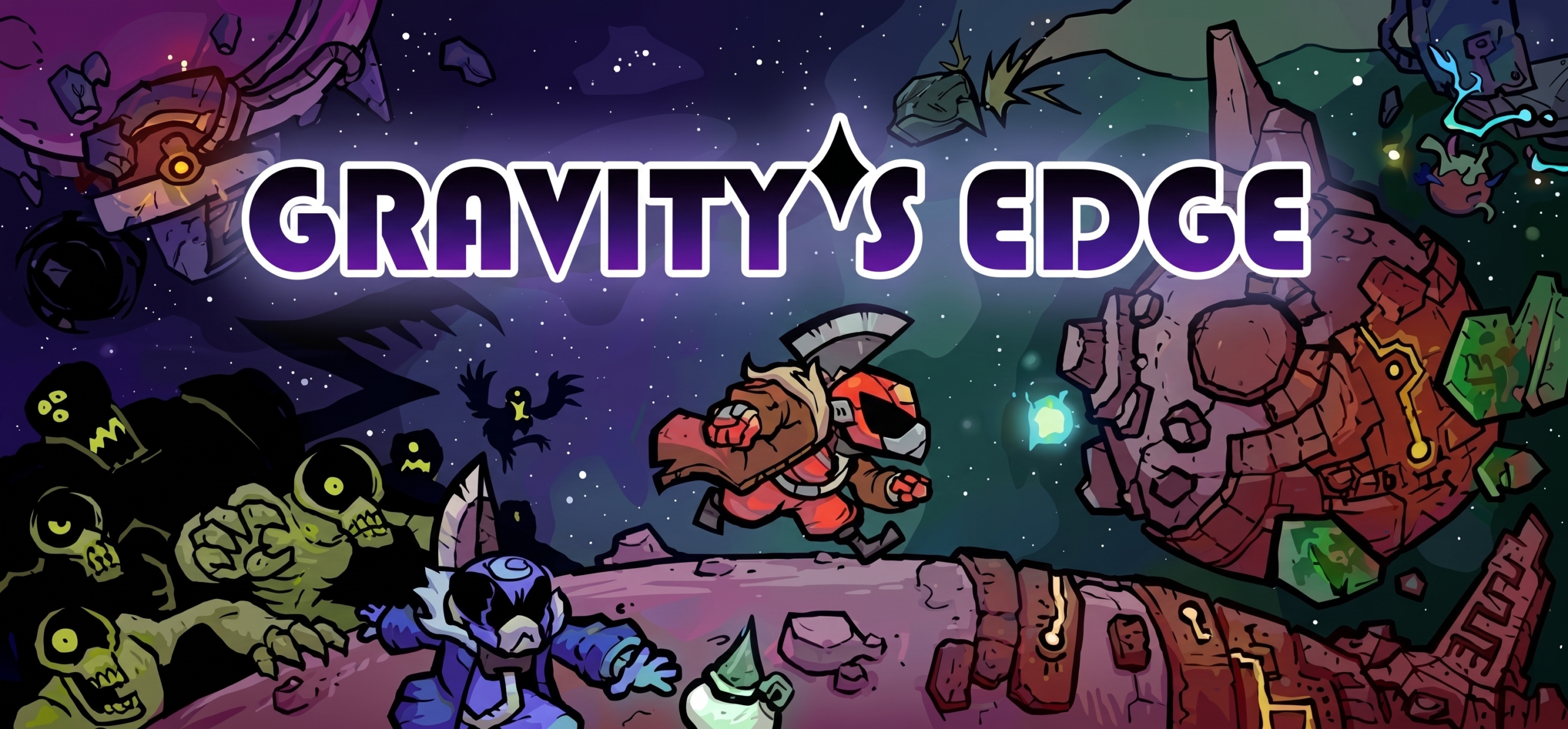
What immediately separates *Gravity’s Edge* from every other side-scroller on the 2026 market is its uncompromised, deeply felt commitment to cultural world-building. Rather than treating diversity as a superficial marketing check, Kamau Vassall has poured his own lived experiences, ancestral history, and personal heritage right into the structural foundations of the game’s script.
The narrative tells the intimate, coming-of-age story of a young adolescent protagonist who leaves his familiar home planet to embark on a high-stakes, interstellar expedition across the cosmos to track down his missing father. The main character wears his father's old, weathered flight jacket, proudly adorned with a central family crest modeled directly after traditional **West African Adinkra symbology**. Specifically, the crest integrates the *Akan* philosophy of wisdom, resilience, and ancestral guidance. The game’s rich dialogue nodes reject sanitized corporate english, flowing naturally with authentic **Jamaican patois** and deep cultural idioms. Vassall has masterfully woven these traditional Caribbean and African textures together with heavy narrative inspirations pulled from elite modern space operas like The Expanse and the gritty, anti-authoritarian crew dynamics of Firefly, constructing a magnificent Afro-punk universe that feels completely vibrant, alive, and distinct.
The Traversal Revolution: Mastering Real-World Orbital Physics
Mechanically, *Gravity’s Edge* distances itself from standard 2D platformers by completely replacing traditional linear gravity grids with an advanced, physics-driven **Surface Attraction Engine**. In a standard platforming title, the player's downward axis is fixed permanently to the bottom of the display monitor. In this game, gravity is completely decentralized, radiating outward from the structural core of thousands of microscopic planets and rogue asteroid blocks.
As you sprint across these tiny, spherical worlds, the game’s centripetal physics engine keeps your character's boots firmly attached to whatever geometric surface you are currently traversing. This setup completely alters your spatial awareness: running forward across a miniature moon seamlessly rotates your perspective, turning upside-down runs, vertical cliff-scaling, and full 360-degree loops into a natural, fluid part of map navigation. Traversal quickly transitions into a deeply engaging puzzle itself. To bridge the massive gaps between separate celestial bodies, players must intelligently harness gravity slingshots—sprinting along a high-velocity curve and launching themselves into the weightless void at the exact correct angle, using the magnetic pull of an adjacent planet to catch their fall safely. Vassall worked hand-in-hand with acclaimed independent illustrator Sam McCollum to bring this kinetic playground to life, coating the entire physics framework in a gorgeous, clean retro comic-book line art aesthetic that evokes the gold age of underground sci-fi print publications.
The Strategic Scope: 300 Worlds and Seven Branching Endings
For strategic purists and completionists seeking massive value for their investment, the game’s core *Story Mode* delivers a sweeping, incredibly ambitious scope. The campaign map features an array of over 300 unique worlds, each packed with dangerous alien lifeforms, dense urban space-cities, hidden planetary quests, and ancient, unmapped mysteries.
Exploration across this vast cosmic horizon is entirely non-linear, tasking players with managing planetary defense operations while hunting for clues regarding the protagonist's father. As you map out the sectors, you will systematically stumble upon structural monuments, ancient alien statues, sacred shrine ruins, and massive, floating satellite graveyards leftover from historic orbital wars. Lurking right at the outer boundaries of the sector maps is a mysterious, highly volatile political faction known simply as **The Outcasts**. The choices you make when interfacing with this group carry real, uncompromised structural weight. *Gravity’s Edge* features multiple branching narrative pathways, with your moral determinations, faction alignments, and quest completion metrics funneling the finale into seven completely separate story endings, ensuring immense long-term replayability.
| Orbital Space Sector | Primary Topographical Profile | Key Environmental Traversal Hazard | Exclusive Core Exploration Target |
|---|---|---|---|
| The Akan Asteroid Belt | High-density clusters of rotating, line-art rock fragments. | Violent, unpredictable magnetic shifts and colliding debris. | Ancient Shrine Monuments housing permanent stamina upgrades. |
| The Bloomfield Outskirts | Overgrown, nature-reclaimed space-colony cities. | Automated security turrets and high-voltage grid lines. | Hidden journal logs detailing your father's final flight paths. |
| The Satellite Graveyard | Decommissioned capital ships and hollow steel hulls. | Absolute zero-gravity pockets and leaking radioactive fuel lines. | Rare Ability Anvils used to permanently mutate your combat perks. |
Couch Co-Op Chaos: The Two-Player Split-Screen Survival Mode
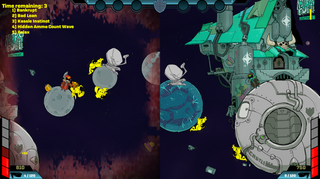
Beyond its deep, multi-hour campaign mode, *Gravity’s Edge* packs a massive punch through its standalone, hyper-addictive Survival Mode. Designed as a direct, unapologetic love letter to old-school arcade couch gaming, this mode allows you to face the terrors of the cosmos completely solo or team up with a partner via two-player split-screen couch co-op.
In Survival Mode, players are dropped into tight, gravity-bending arenas and tasked with surviving against endless, escalating waves of hostile alien mobs and automated biomechanical threats. To maintain your ground, you must rapidly scavenge the map to hunt down specialized **Ability Anvils**. Interfacing with these anvils allows you to forge custom modifications, deploy defensive traps, throw down field-barriers, and unlock high-tier elemental weaponry on the fly. To inject a magnificent layer of high-stakes tension into your cooperative gameplay, the software includes comprehensive **Friendly Fire Toggles**. Activating friendly fire completely overhauls the tactical meta, forcing you and your couch partner to precisely coordinate your firing lines, time your gravity leaps, and position explosive devices flawlessly to avoid accidentally vaporizing your teammate mid-skirmish.
"Gravity’s Edge represents a spectacular, deeply necessary triumph for independent game design. It proves that complex, real-world orbital physics can be masterfully utilized to deliver a highly accessible, culturally rich, and profoundly moving interactive adventure."
Technical Performance, Optimization, and Storefront Trial Access
From an engineering and optimization standpoint, *Gravity’s Edge* runs flawlessly on PC architecture. The line-art visual layers look incredibly crisp at high resolutions, and the physics calculations run smoothly without experiencing frame-rate dips, system stuttering, or input delays—a critical achievement for a title that demands absolute trajectory precision during high-speed gravity jumps. The audio design perfectly elevates the presentation, wrapping the player in an unforgettable, bass-heavy electronic soundtrack heavily infused with roots reggae, dub rhythms, and Afro-beat percussion loops that keep your adrenaline pumping throughout the journey.
For consumers who remain slightly hesitant to commit their hard-earned dollars to a fresh independent release, Kassle Games has implemented an incredibly consumer-friendly onboarding strategy. Alongside the launch of the full software, the publishers have deployed a free playable standalone Steam Demo. This generous public build grants users unrestricted access to the initial introductory worlds, allowing you to master the basic momentum mechanics, test the input responsiveness on your preferred controller or Steam Deck configuration, and sample the narrative patois dialogue firsthand before spending a single dime on the premium build.
Conclusion: The Defiant Breakout Indie Achievement of 2026
Ultimately, Gravity’s Edge arrives in the 2026 release calendar as an exceptionally fun, masterfully executed, and genuinely essential sci-fi triumph that stands out as an absolute masterpiece of the action-adventure genre. Kamau Vassall and Kassle Games have successfully managed to deliver an experience that honors the complex, logical beauty of astrophysics while using personal cultural heritage to give the open world a beautiful, unforgettable soul.
While the non-traditional centripetal rotation mechanics will undoubtedly require a brief mental orientation phase for casual players used to flat side-scrollers, its deep branching narratives, outstanding split-screen cooperative survival modes, and incredible retro comic-book aesthetic guarantee it will secure a passionate, hyper-loyal following across the globe in 2026. Grab your controllers, synchronize your local co-op setups, and download the full game or free demo today—the planetary defense lines are active, the Adinkra family jacket is zipped up, and the ultimate journey across the edge of space is officially ready to roll.
Gravity’s Edge Production Specifications:
- Developer / Publisher: Kamau Vassall / Kassle Games.
- Global Launch Status: Out Now on PC via Steam (Free Standalone Demo Active).
- Retail Valuation: $7.99 USD Launch Discount Price.
- Core Technical Features: Full Steam Deck Verification, Rebindable Hotkeys, Custom Controller Profiles.
- Primary Gameplay Pillars: Orbital Physics Traversal, Branching Visual Novel Choices, 2-Player Split-Screen Co-Op.
- Art & Audio Direction: 2D Retro Comic Line Art Aesthetic paired with an Afro-Caribbean Roots and Dub Soundtrack.